
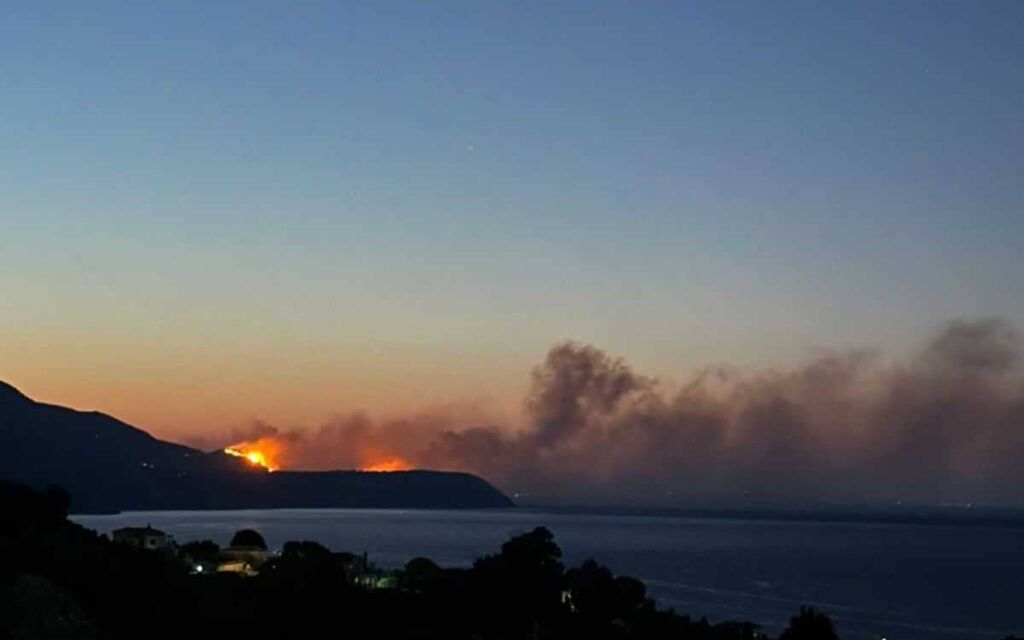
Current situation with fires in Greece: where is burning, how much damage is done, and what warnings are in effect?
In recent days, there have been major fires in Greece, but this does not mean that the entire country is on fire as some news may suggest. The most severe situation currently exists in western Attica and southern Boeotia, approximately 70 kilometers west of Athens, and in the south of Kefalonia, while fires or smaller clusters are being extinguished in certain parts of central Greece, northern Peloponnese, and Crete.
Over the past 24 hours, 59 grassland and forest fires have broken out across Greece. Forty-five of them have been extinguished at an early stage.
Most critical areas: Western Attica and Porto Germeno
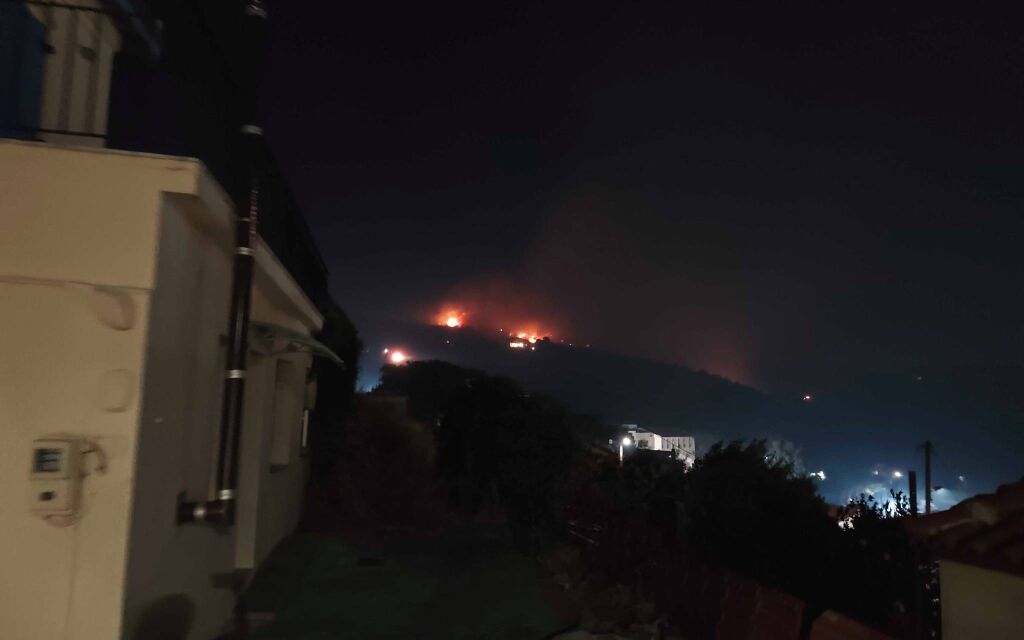
The biggest challenge remains the fire that spread from Boeotia to the western part of Attica and affected a wider area of Porto Germeno. The fire passed through a large pine forest area, reached settlements, and in some places even made it to the coast. Evacuation orders were issued for several settlements during the day, while some residents and tourists were evacuated by boats. The fire spread in several directions and constantly changed direction due to stormy and highly unpredictable winds.
Nearly 500 firefighters are engaged across the entire area, including teams from France and Romania.
The strong wind not only accelerated the spread of the fire but also practically prevented aerial firefighting during the most critical hours. The wind, reaching speeds of six to seven Beaufort, was so strong that airplanes and helicopters could not safely fly. Aircraft were occasionally able to perform a limited number of water drops in short periods when the wind temporarily subsided, while the majority of the battle was fought on the ground.
Material damage: According to the deputy mayor of Mandras, between 100 and 150 houses have been affected or damaged by the fire in the wider Porto Germeno area. However, this is not the final official assessment.
Central Greece, Peloponnese, Kefalonia, and Crete
Central Greece and Peloponnese
Another serious fire broke out in Phocis, in central Greece, across from the northern coast of the Peloponnese. During the day, the fire reached the yards of some houses and caused multiple evacuations. By late evening, the situation had slightly improved, but scattered clusters remain and there is a significant risk of re-ignition. An alert has also been issued for the industrial area of Megara (112).
Kefalonia
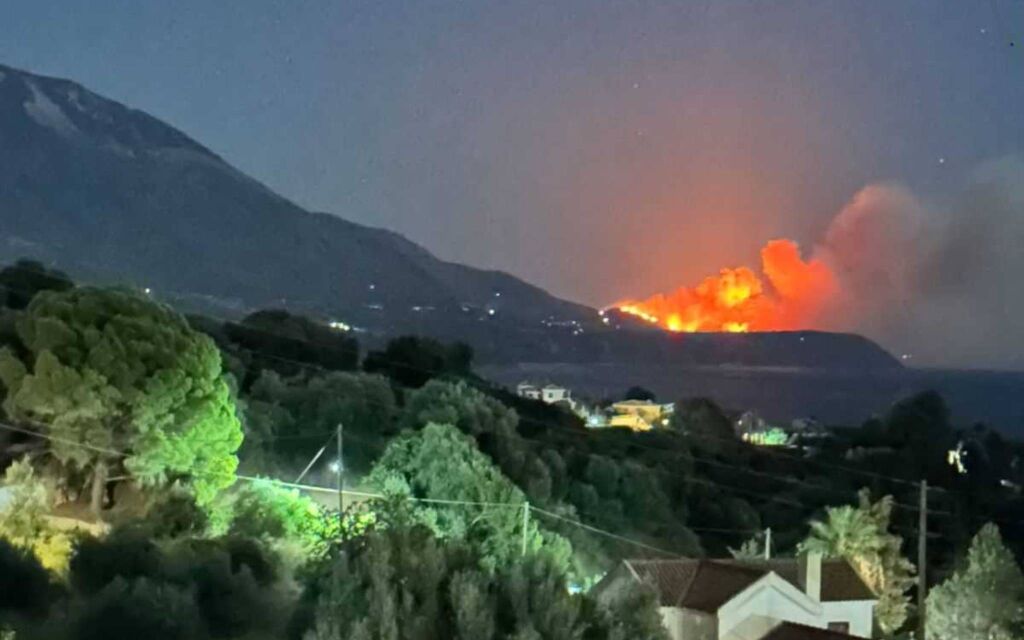
A fire broke out in the south of Kefalonia in the area between the villages of Markopoulo, Kremithi, and Kasteli. Several villages received evacuation orders. Today (August 2), stronger winds have started blowing again. According to our followers: “Two planes appeared with the first rays of sunlight and have been circling for hours. The smell of burning has been noticeable recently.”
Southern Crete
In southern Crete, in the Rethymno region, large fires are subsiding, but firefighters continue to monitor numerous hotspots. Olive groves, agricultural land, buildings, livestock, and parts of natural areas have been destroyed. The fire also reached the area of the famous palm forest of Preveli, although it seems that its largest part has been preserved.
How much land has burned so far?
The final total for the latest fires does not yet exist, as the fire in western Attica is still spreading, and satellite mapping is yet to be completed. The preliminary estimate for the large fire in southern Boeotia is between 4,000 and 5,000 hectares of affected land. So far, approximately the following areas have been affected on southern Crete:
- 4,000 hectares around Rethymno;
- another 760 hectares in the Preveli area.
On Paros, in the Cyclades, approximately 1,000 hectares have been affected by the fire. When these initial estimates are added up, approximately 9,700 to 10,700 hectares of land have been affected only in Crete, Paros, and part of Boeotia. This does not yet include the final consequences of the fires in western Attica, Phocis, Achaia, and other regions.
Animal Rescue
In addition to firefighters, police, and emergency teams, volunteers and animal protection organizations are involved in the western Attica area. The Greek National Mechanism for Animal Protection in Natural Disasters has been activated, and organizations like Dogs’ Voice and other rescue teams are visiting yards, cottages, farms, and abandoned areas searching for trapped animals. According to the latest information, at least 62 animals have been rescued - pets, stray dogs and cats, as well as domestic animals. A temporary reception center has been set up for them at the Vilia Stadium. Unfortunately, animals that were unable to escape the fire have also been found on roads and properties.
Arrests and Possible Causes of Fires
For the fire on Paros, the island’s mayor, his deputy in charge of cleanliness, the contractor responsible for waste disposal, and a municipal worker were arrested. An investigation is underway to determine if the fire started from an illegal part of the landfill where waste and large amounts of dry branches were located, and if the necessary protective measures were taken. All four were later released, as the prosecution requested further investigation before any charges were brought.
In Rethymno, Crete, the head of the local electricity distribution network was arrested. According to one of the main versions of the investigation, an overloaded cable melted and sparked. His potential responsibility for maintaining the network and not taking necessary measures is being examined. He has been released pending trial with a travel ban, and he denies the charges.
In Argolis, on the eastern Peloponnese, a 57-year-old man and a 53-year-old woman were arrested. According to the investigation, they were performing agricultural work with a tractor equipped with a vegetation shredder which produced sparks and caused a large fire.
Two individuals were arrested for the major fire in Boeotia - it is suspected that sparks from the network connected to wind turbines caused it. The supervising electrical engineer and the contractor were arrested, while the company owner is being sought. The location of the fire outbreak was determined through video analysis, testimonies, and found evidence.
A total of 11 arrests were made in seven separate cases in just two days. Among them were individuals using grinders and welding equipment, burning waste, or using fireworks despite the ban and extreme fire risk. From the beginning of the year until August 1, 254 arrests related to fires were made: 226 due to negligence and 28 due to suspicion of intentional arson.
The most tragic toll in recent days is the death of three firefighters - two during the fire in Crete and one during the intervention in the Peloponnese.
Warning for the Coming Days
For Sunday, August 2, the entire Attica, Boeotia, and Evia regions have been placed on high alert, under Red Code. These areas are under a very high fire risk, of the fourth category.
The greatest danger continues to be very dry vegetation and strong winds. In such conditions, a spark from an agricultural machine, grinder, welding equipment, power line, or an unextinguished cigarette can quickly escalate into an uncontrollable fire.
Residents and tourists are advised to:
- not light fires and barbecues in open areas,
- avoid using machines that produce sparks, and
- immediately follow warnings from the 112 service.
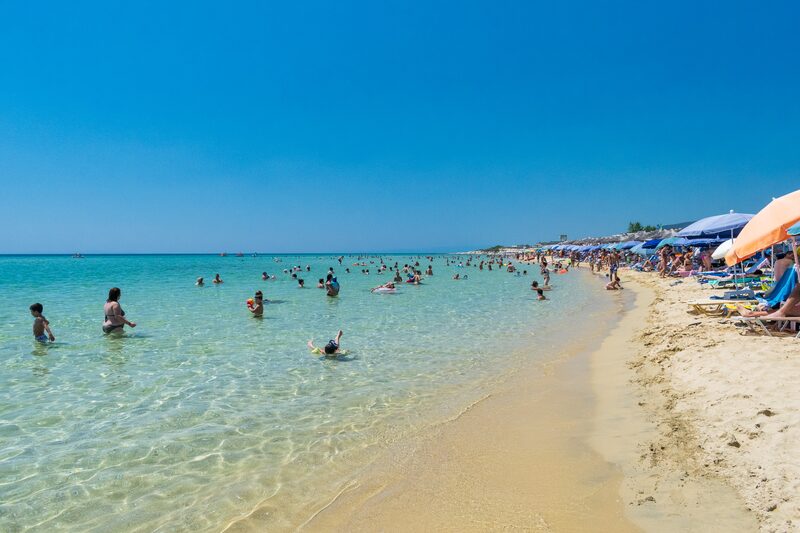
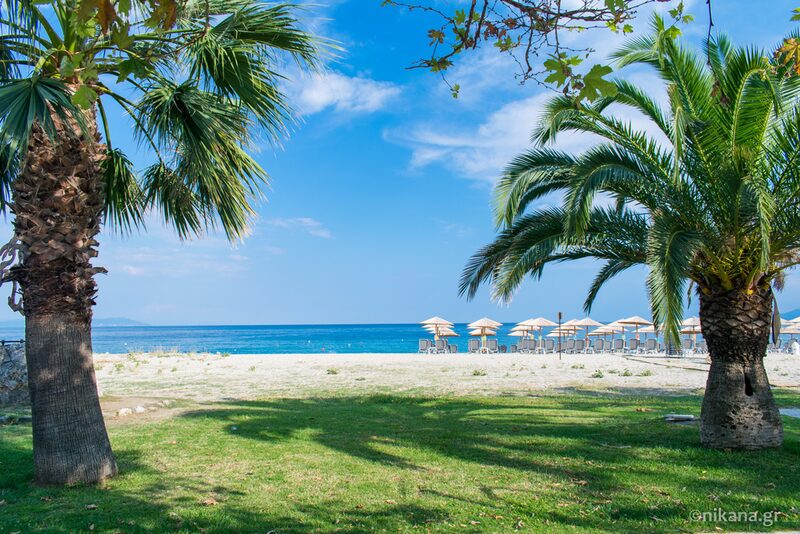
It is important to reiterate that the majority of Greece is currently not at risk, and most resorts are operating normally. However, individuals in western Attica, southern Boeotia, or near other active fires should follow local notifications, avoid roads leading to fire-affected areas, and not approach the fire for photography or filming.