



Many of you are confused about the EES system and have the same question – will it be applied to all passengers and are we facing long waits at the borders with Greece, under the sun, with the potential for collapse?
The short answer is that we do not expect long waits due to the EES system, as the system is already being applied flexibly, and countries have the option to adapt it to the situation.
That is why we want to explain to you how the EES system will look like in practice and why we believe there is no reason to worry.
What is the EES system and does it apply to all passengers
The EES (Entry/Exit System) is a system for controlling entry and exit from the Schengen Area, which involves scanning passports, taking fingerprints, and facial photography. It is important to emphasize that the EES system formally applies to all passengers outside the European Union, including passengers from Serbia and North Macedonia traveling to Greece. However, the key thing to understand is that the implementation in practice is not mandatory for everyone at all times.
Will the EES be applied to every passenger
The “full implementation” of the EES system as of April 10 does not mean that every country must scan every passenger. Countries have the flexibility to decide when to apply complete biometrics, and when to expedite the procedure and only perform the standard passport control as before. In practice, this means that EES control at the Serbia - Greece border may differ from the current situation and congestion.
Current situation - practical experience
We have recently traveled to both Greece and Germany and can firsthand say that there were absolutely no crowds or delays due to the EES system. Of course, we do not dismiss the fact that the season has not yet begun. Specifically for Germany, passengers did not go to the automated machines at all; they went directly to the counters. Some were scanned, some were not, some had fingerprints taken, some did not. Therefore, the EES is currently not applied the same to all passengers and does not cause any delays. A similar situation was on the way to Greece – one of us only had fingerprints taken, and the other was photographed. And everything went smoothly without any waiting.
Are there delays at airports due to the EES system
From the media, we see that there are delays at some airports. It is possible that this is partly due to the EES system, but it cannot be determined with certainty to what extent. In the coming period, it will become evident how the system functions in practice and what the situation will be during the summer season.
What happens at the Serbia - Greece border (Evzoni)
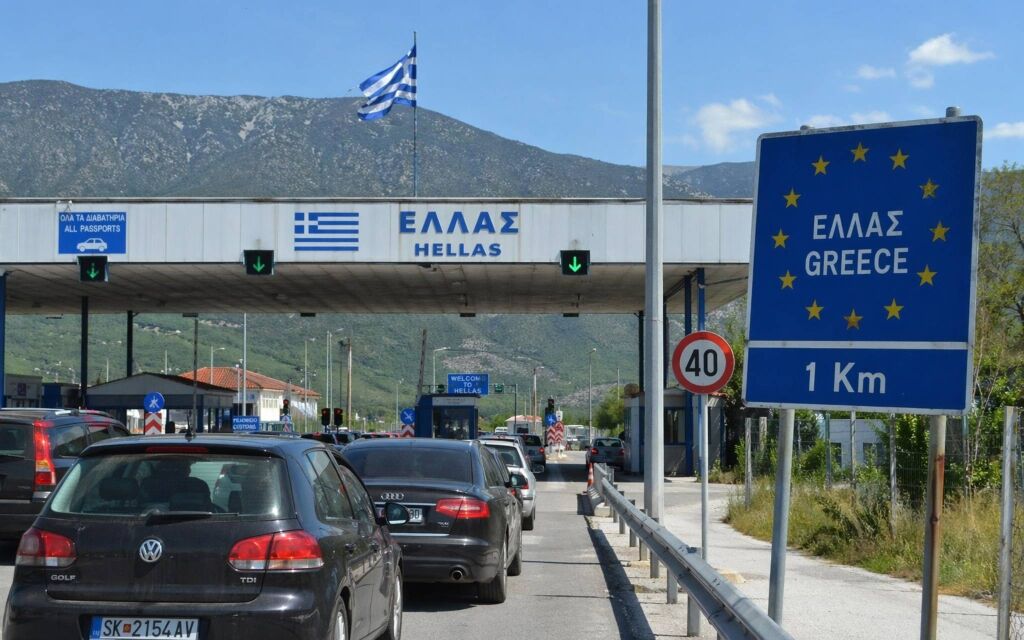
At land crossings, such as Evzoni, there are not many automated machines as at airports. Usually, there is one smaller device at the counters. Under such conditions, it is absolutely unrealistic for every passenger to undergo complete biometric control, especially during the peak season. Frankly, we do not believe that the Greeks with such a small number of devices plan to check every passenger.
Practical example: Easter crowd
We have a specific example from the period before Easter. Our people, hikers, were on buses at the border – there were five in a column. After about an hour of waiting, everyone was let through without the EES procedure being applied. This is firsthand information. The conclusion that naturally arises is that when congestion occurs, the system speeds up or skips, and we expect it to be the same during the season.
News about the British – what has actually changed
There was news in the media that Greece had “abolished” the EES for Great Britain. It is important to understand this correctly. The law has not been changed, and the EES still formally applies to everyone. However, Greece has decided to relax or not apply biometrics for British tourists at airports in practice. The reason for this is very simple – a huge number of tourists, pressure from airlines and the tourism industry, as well as the real risk of major congestion. This example clearly shows that countries are already using the flexibility of the system.
EES and tourism - why nobody wants chaos at borders?
It is important to understand another key point that is often overlooked – chaos at borders and long waits are not in anyone’s interest. First and foremost, tourism is one of the most important economic sectors in Greece. Millions of tourists come every year, especially in the summer season, and any serious slowdown at the borders would directly affect:
- number of arrivals
- guest satisfaction
- spending
- destination reputation
That is why it is completely logical that the country will not allow a scenario where people wait for hours in the sun and wonder whether to come next year at all. It is not only state institutions involved. The whole story includes:
- hoteliers
- tourism organizations
- airlines
- tour operators
They all have the same interest – to ensure a faster and simpler flow of tourists. That is why there is pressure and adaptation of the system in practice. An example of this is Great Britain, where additional adjustments were introduced at airports due to the large number of passengers and the influence of the tourism industry, to avoid congestion.
But this is not an isolated case. Other tourist countries like:
- Italy
- Portugal
- Spain
All these countries have already shown that they are willing to apply the system flexibly, precisely because tourism is a key source of income for them.
Also, according to available information, the EES system is currently not constantly applied at the airport in Athens, but at specific time intervals (for example, a few hours during the day and a few hours during the night). This further demonstrates that the system is being gradually and controlledly introduced, not rigidly.
In northern Greece, where there is a large number of tourists from Serbia, Bulgaria, and North Macedonia, there is also awareness of potential issues. Local hotel associations and people in tourism actively monitor the situation, as they want guests to arrive without stress and delays.
All this together leads to the same conclusion: the system will be applied, but not at the cost of chaos and loss of tourists, and that’s exactly how the Greek authorities announce it
Should we expect crowds at the border with Greece
Based on everything we currently see, it is clear that the EES system exists, but it is not applied uniformly to everyone, and its implementation depends on congestion and the specific situation. Therefore, we do not expect long waits or collapse at the borders with Greece. Simply put, it is not in the interest of the country, not in the interest of tourism, and there is the possibility to adapt the system in real-time.
Therefore, the EES system in Greece will exist, but it will be applied flexibly. And that’s why there is no reason for panic or expectation of major delays at the borders.
For more information about the system and answers to frequently asked questions, see our article: What is the EES new border control system?
Follow us on social media for the latest news and information:
- Facebook: Nikana.gr
- Instagram: @nikana.gr
- Tiktok: nikana.gr
- Facebook group: Live from Greece
- YouTube channel: @NikanaTravel
- Email us at: nikana@nikana.gr
- Visit our website nikana.gr which is the leading source of information about Greece in the Balkans.


