


Greece has violated EU rules due to British tourists - but here’s what that actually means for our tourists!
When Greece announced that British tourists would be exempt from the ETIAS system, it attracted great attention, as the rules of the European Union clearly state that this system applies to all passengers outside the EU and cannot be waived for a specific nationality throughout the entire season. The EU has allowed for flexibility. This means that each country can halt or mitigate the implementation of the system when queues begin to form. In other words - the system exists, but it does not have to be applied at all costs.
However, by exempting an entire nationality for the entire season, Greece has violated the legal regulations. This is why Brussels has reacted and is now seeking additional explanations from Greece.
Why did Greece even go in that direction?
Because the pressure is enormous.
First, airlines. When there is a delay at passport control and passengers miss their flight, the cost falls on them. This has already happened at airports in Italy and Spain, where passengers have been late for flights due to queues. And when one flight is delayed, it affects the next one - thus creating a chain problem. Therefore, it is in their interest to ensure that the flow of passengers is not slowed down.
Then come large and powerful tourist agencies. Companies like the TUI Group, as well as Jet2 Holidays and easyJet Holidays, bring millions of tourists and directly depend on smooth travel experiences. When there is a risk that guests will wait for hours or that their journey will become complicated, they react. Their influence is significant, and it is logical for them to exert pressure to adapt the rules.
The third reason is the market itself. Around 5 million tourists travel from the UK to Greece every year. This is a huge number, accounting for about 12-15% of all foreign visitors. If there is a problem here, it is not a minor disturbance - it poses a risk to the entire season.
And then we come to the reality at airports. At one point, multiple flights land, hundreds of people disembark simultaneously, everyone rushes to passport control, some have connecting flights. All it takes is a small delay, and you already have a situation where people miss their flights. Hence, there is a real fear of complete congestion in the system at the peak of the season.
And finally, the internal pressure in Greece itself. Hoteliers, accommodation owners, and all those who depend on tourism know very well what it means when guests have a bad experience right at the border. For them, it’s a direct risk. And it is logical for them to influence decisions and seek the application of the system in a way that does not jeopardize arrivals.
In other words - pressure is coming from all sides, and everyone has the same goal: to ensure that tourism operates smoothly without delays.
What does this mean for our tourists?
It means that the ETIAS system exists and is formally valid, but in practice, it will not be applied rigidly if it leads to queues. This is already clear through the rules and what is happening on the ground.
This system was not introduced to create chaos at borders and deter people from traveling. On the contrary, the European Union has foreseen the possibility of suspending or easing its implementation when queues start to form. And perhaps that is the most important message here. If there is a risk of waiting for hours - the system will adapt. The good news in all of this is that Greece is clearly thinking about tourists and how their arrival will actually look in practice. Therefore, it is much more realistic to expect that the rules will be adjusted to the situation, rather than allowing a collapse at the borders in the middle of the season.
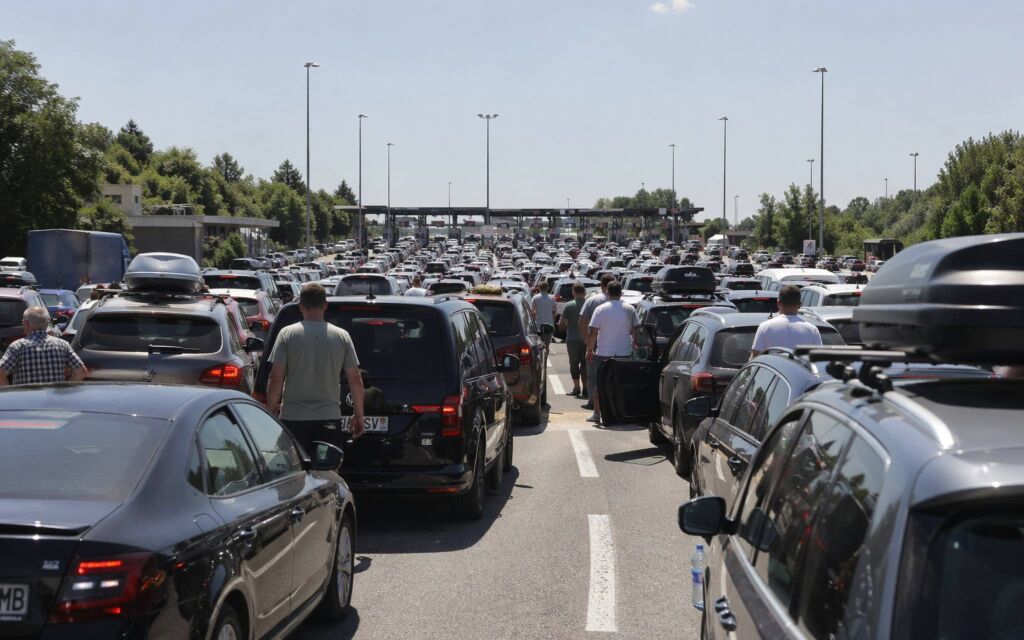
Now the ball is in the court of hotel associations and apartment owners, as well as tourist agencies, to take this situation seriously and exert pressure to ensure the smooth passage of tourists - not only at airports but also at land borders.
This issue has already been discussed at meetings of local associations in Halkidiki and other regions, showing an awareness of the problem and the need to react in time.
On our part, we have sent an appeal to over 3500 accommodation owners we collaborate with, as well as to a larger number of relevant media outlets in Greece, with the aim of initiating an official communication to tourists from Serbia and other countries arriving by land.
The idea is simple - to send a clear and encouraging message to people, so they know what to expect and do not give up on traveling due to the fear of waiting at the border. Because, in the end, it all comes down to the same question: Would the potential border wait deter you from traveling to Greece?


