


State kindergartens in Thessaloniki: First-hand experience
Regarding the experience with state kindergarten in Thessaloniki, we spoke with Nevena, a Serbian woman who has been living in Greece for years and whose daughter attends a state kindergarten. Nevena has been our colleague for almost a decade, so it was particularly interesting for us to hear how it all looks from a parent’s perspective. We did not discuss the rules written on paper, but rather everyday matters that interest parents the most - how enrollment looks like, whether the kindergarten is paid, how excursions function, what children do during the day, and what collaboration with parents looks like. Of course, experiences can vary from one kindergarten to another and from one municipality to another, so this is a story about one state kindergarten in Thessaloniki.
How does enrollment in a state kindergarten in Greece work and who has priority?
We started our conversation from the enrollment.
In Greece, all children can apply for a state kindergarten. For children up to four years old, this is the “paidiko stathmo,” an institution that includes both nurseries and kindergartens for the youngest. However, the number of places is limited, so a ranking list is formed. Priority is usually given to families where both parents are employed, single parents, families with more children, as well as those who meet certain social and economic criteria. The address where the family lives is also taken into account.
What is the ESPA voucher and how to get a free kindergarten in Greece?
Enrollment often depends on the ESPA voucher, a subsidy granted through a program funded by the European Union. Families that meet the requirements can receive free or subsidized childcare in state, as well as in some private kindergartens.
For example, we received that voucher for three years, and during that time Maria attended kindergarten for free. When you apply, you choose three kindergartens. You will be accepted in one of them. The first year we got the third one on the list, and the next two years we got the one we wanted because it was the closest to our home.
How much does a state kindergarten cost in Greece and what are the additional costs?
Although childcare through the voucher is free, there are minor costs throughout the year.
For preschoolers, we pay around 80 euros for the whole year, mainly for supplies. At the beginning of the school year, we receive a list of what we need to bring - notebooks, markers, glue, and other materials that children use during activities. In addition, parents also pay for excursions and performances organized during the year.
Excursions are usually around 20 euros. Last year we paid 24 euros for a visit to a horse farm, and a trip to a farm near Thessaloniki, where only the children went, was 12 euros. Performances that come to kindergarten cost around five euros. Unlike what we are used to in Serbia, excursions are not organized by travel agencies.
The kindergarten organizes them itself. The director, in agreement with the parents, chooses where we will go, so the prices are much lower as a result.
What is the role of parents and the Parent Council in the kindergarten?
While discussing how the kindergarten operates, Nevena also told us how parents are involved in the daily life of the institution. They have a parents’ association, and this year she is its president.
I collect money for gifts, help organize events, buffets, and similar activities. We have a common fund where each family pays 20 euros for the kindergarten’s needs. From that money, we bought Christmas trees, decorations, candles for Easter, fairy tales for children, but also houses for the yard. The educators buy what is necessary, bring receipts, and we reimburse them. She says everyone contributes in their own way.
One dad brought old tractor tires and soil so that children could plant vegetables. My husband assembled a little house and repaired the lawnmower. I inform parents when there are changes in working hours or when excursions and other activities are organized.
What is it like working with children and mandatory preschool (Nipiagogio)?
When talking about working with children, she says she likes the way the kindergarten functions.
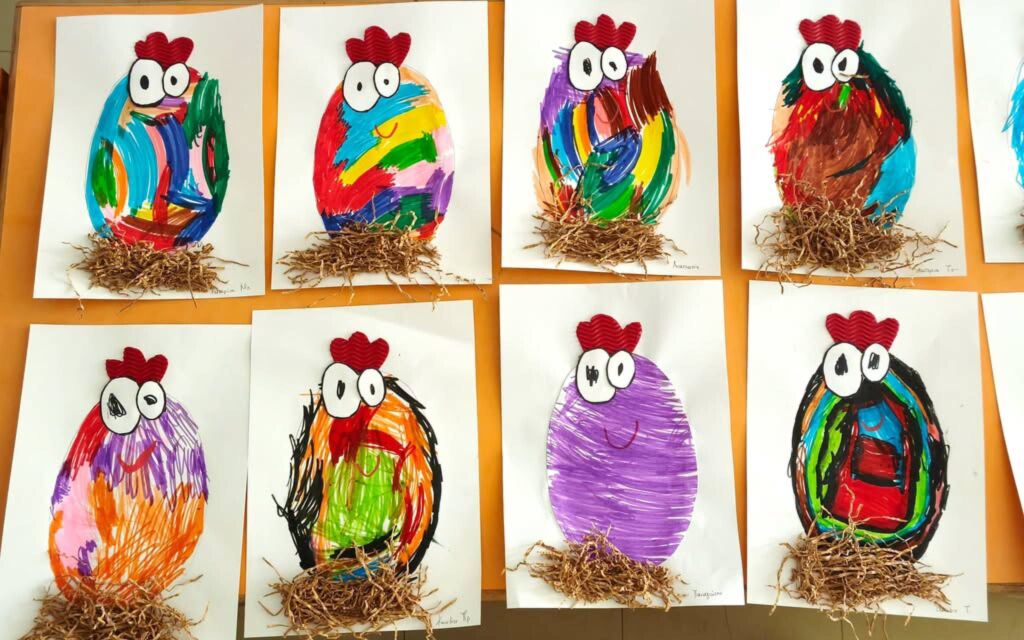
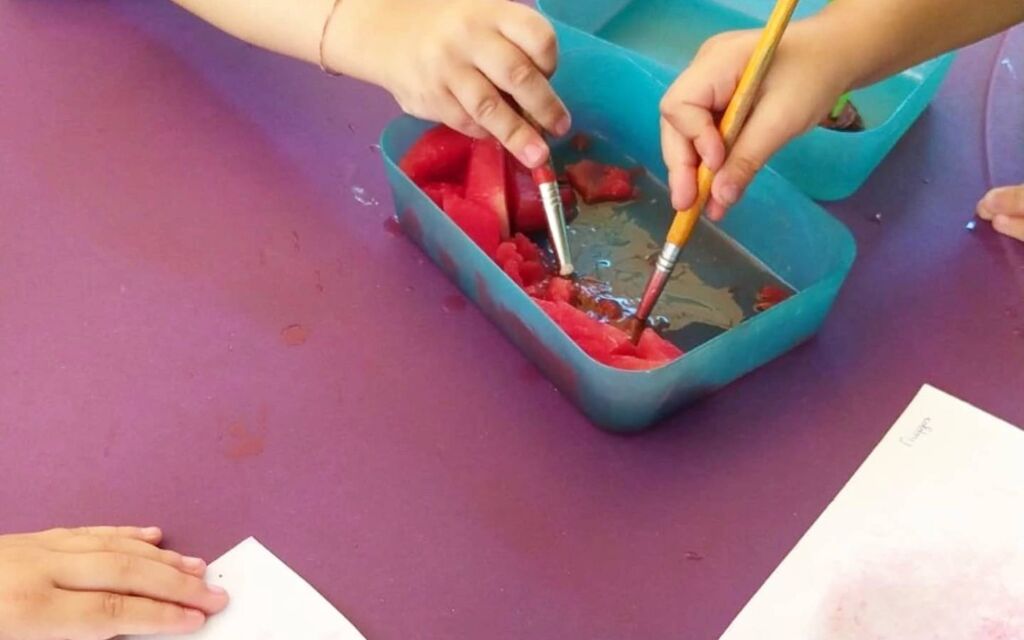
What I like most is that children spend a lot of time outdoors and learn a lot through play. They pay great attention to history, national, religious, and state holidays. Children get to know their tradition through songs and games. My daughter already knew the Greek anthem at the age of three. They also organize theater performances, sports activities, and children in preschool age learn English through play twice a week. Nevena says that preschool education in Greece differs significantly from what we are used to in Serbia.
Children learn to write their names at the age of four, which later makes it easier for them to learn to read and write. Twice a year they go on excursions where parents are also present. Our kindergarten occasionally takes them to church for the morning liturgy.
In Greece, children start first grade at the age of six, so two years of preschool education are mandatory. This part of the system is called “nipiagogio” (νηπιαγωγείο) and is intended for children aged four to six. Before that, children can, but are not required to attend the “paidiko stathmo,” or nursery and kindergarten for younger children.
What are the working hours of state kindergartens in Greece?
The working hours are adapted to employed parents.
The “paidiko stathmo” usually operates from 7:30 am to 4:30 pm. Parents who work bring their children between 7:30 and 7:45 am, while others can bring them by 8:45 am. Children who stay for the whole day go home around 4:15 pm.
A similar organization exists in the “nipiagogio.” There is a morning slot for children of employed parents from 7:30 to 7:45 am. Other children arrive between 8:10 and 8:30 am.
What is the food like in state kindergartens in Greece?
When we talked about the daily life in the kindergarten, we also touched on food, which is one of the things she would like to see differently.
I don’t like that there are no organized meals in preschool, so each child brings food from home. We receive a schedule of what to bring each day, so all children usually eat the same things. The food is not reheated, so it often happens that what we send remains uneaten.
Meal preparation is part of the daily routine.
Honestly, it’s not easy for me to get up at seven every morning and prepare food. For breakfast, I usually send toast, boiled eggs, bread, honey, jam, or cheese pie. Fruit is mandatory and cut into small pieces. For lunch, I pack something cooked - lentils, peas, green beans, soup, pasta… Sometimes I add a salad or cheese.
What is the situation in nurseries?
The situation in nurseries is different.
Nurseries are intended for children from six months to three years old. If a family receives the ESPA voucher, childcare is free. If they don’t receive it, they pay around 80 euros per month. You apply for the voucher through the official portal of the Greek state, gov.gr, and the entire procedure is completed electronically.
Unlike preschool, nurseries have organized meals.
Children receive milk, cereals, bread with butter and honey or cheese, and for lunch, they must have a cooked meal. The food is prepared by a catering service.
Advantages and disadvantages of state kindergarten in Greece
At the end of the conversation, we asked her to highlight the greatest advantage and disadvantage of the state kindergarten.
Nevena says she especially likes that children spend a lot of time outdoors, learn through play, and parents feel like they are part of the community.
Everyone gets involved as much as they can. I really like that.
On the other hand, preparing food every morning remains something she would like to change.
That is the biggest disadvantage for me. I would like to have organized meals for children in the state preschool.
As always, it should be noted that experiences vary from one kindergarten to another and from one municipality to another. This is the experience of one family from Thessaloniki.
Public or Private Kindergarten in Thessaloniki: Why Do Parents Choose Private Ones?
In addition to Nevena, we also spoke with Gorana, our former colleague from Thessaloniki, who also lives in Greece and has a daughter who will soon turn two.
Unlike Nevena, her child does not attend kindergarten yet, but the family is already considering what the best choice would be.
– We will definitely enroll her in a private kindergarten, but to be honest, we haven’t gone through the whole process yet, so I can’t speak from experience. This is more about what I’ve learned so far and how we are currently thinking.
She says that, at least for now, she would prefer a private kindergarten. – As an example, I can mention Fryganiotis. I think they have a high-quality program and dedicate more time to educational activities. They also offer extra activities, such as sports, dance, art, and foreign languages, and the groups are smaller.
Professional support offered by many private kindergartens is also important to her. – Some kindergartens have medical supervision, a speech therapist, and a child psychologist. Parents can also choose an organized meal plan prepared with the help of a nutritionist, which is not the case in most public kindergartens where parents usually bring two meals from home.
When making a decision, the space where the children stay is also important to her. – Fryganiotis is located on the outskirts of the city, has a large yard, lots of greenery, and fresh air. In the center of Thessaloniki, many public kindergartens don’t have that much outdoor play space.
She adds that some parents choose private kindergartens for practical reasons as well. – For many, having organized school bus transportation means a lot. Private kindergartens often stay open longer during the day, which makes things easier for working parents. Public ones usually finish around 4 PM, while some private ones stay open until 6 PM.
Private Kindergarten Prices in Thessaloniki and ESPA Vouchers
When it comes to prices, the differences are significant. – Fryganiotis costs around €520 per month, but the price can be lower if you don’t use their transportation or meal plan.
Private kindergartens can also be included in the ESPA program. – Many accept the ESPA voucher. If you receive it, the state covers the basic stay of the child in the kindergarten. Meals, transportation, and extra activities are usually paid additionally.
Places that accept vouchers fill up quickly. – For in-demand kindergartens, like Fryganiotis, spots disappear very fast.
Who Is Eligible for an ESPA Voucher and How Is the Application Scored?
She also explained who can apply for the subsidy.
– The application is most commonly submitted by the mother, and in certain cases by the father, for example if he is a single parent. Several factors are scored:
- employment status,
- income,
- number of children, and
- social status.
Ensima (social security contributions) are also taken into account, specifically the number of days for which contributions have been paid for the employee. Unemployed parents must have a valid registration with the employment office. In the end, a ranking list is created and the results are published.
Like Nevena, Gorana also emphasizes that she is speaking from her own perspective and based on the information she gathered while choosing a kindergarten for her child.
The two of them have different experiences and needs, but that is precisely why their conversation provides a broader picture. One speaks about the daily routine in a public kindergarten that she has already gone through, while the other explains why she is considering a private kindergarten and what matters most to her when making a choice.
Follow us on social media where we regularly share exclusive offers, discounts, and special packages for holidays in Greece, as well as information, tips, and useful news.
- Facebook: Nikana.gr
- Instagram: @nikana.gr
- Tiktok: nikana.gr
- Facebook group: Live from Greece
- YouTube channel: @NikanaTravel
- Write to us by email: nikana@nikana.gr
- Visit our website nikana.gr, the leading source of information about Greece in the Balkans.


