


Christmas and New Year in Greece smell of cakes, pastries, and spices that are passed down from generation to generation, and the holiday lasts for a full 12 days, from Christmas Eve to Epiphany. Each region has its own specialties – from melomakarona and kurabiedes to local pies, stuffed vine leaves, and soups – and each bite carries a story and symbolism.
The holiday table is not just about food; it brings the family together, preserves customs for centuries, and transforms every home into a place of warmth, joy, and togetherness. Tradition is deeply rooted, and rituals like cutting the Vasilopita and hiding the coin bring luck and prosperity for the whole year.
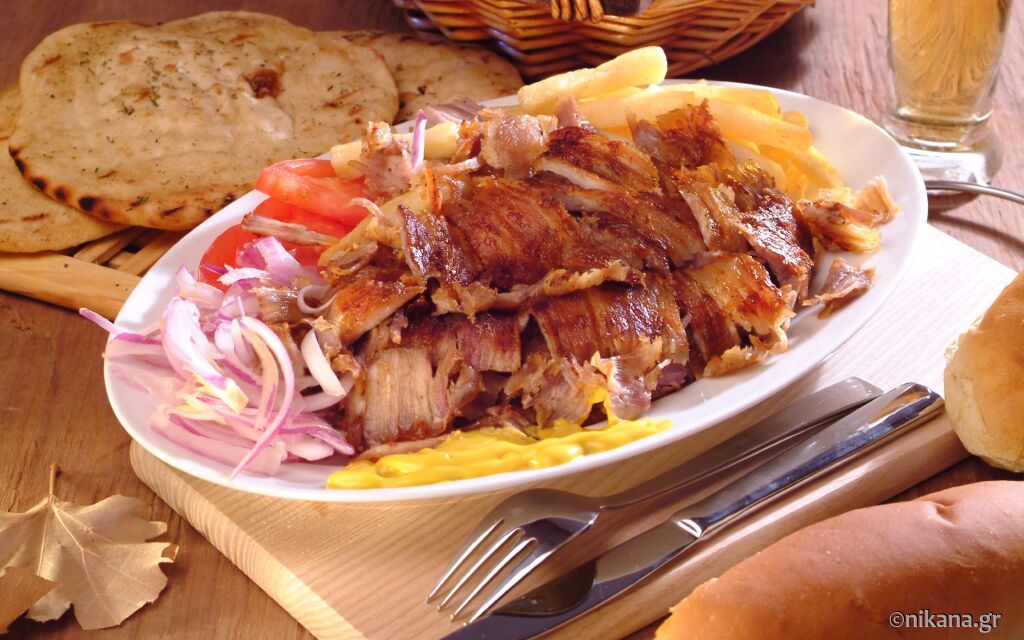
For centuries, meat was a “luxury,” and that’s why it has always been present in various forms on family tables during all major holidays. Especially pork, which is associated with the ancient customs of ancient Greece, during which the peasants sacrificed pork to the god Chronos and the goddess Demeter on Christmas, praying for the grace of the new harvest. In some areas of Greece, the tradition of chicken soup is still maintained, especially in Thessaly and Crete, which has been the main dish eaten after returning from church for ages. In many parts of Greece, fish is the centerpiece of the Christmas dinner, and there are dishes that are unfortunately at risk of being completely lost.
What’s Cooking for the Holidays Across Greece?
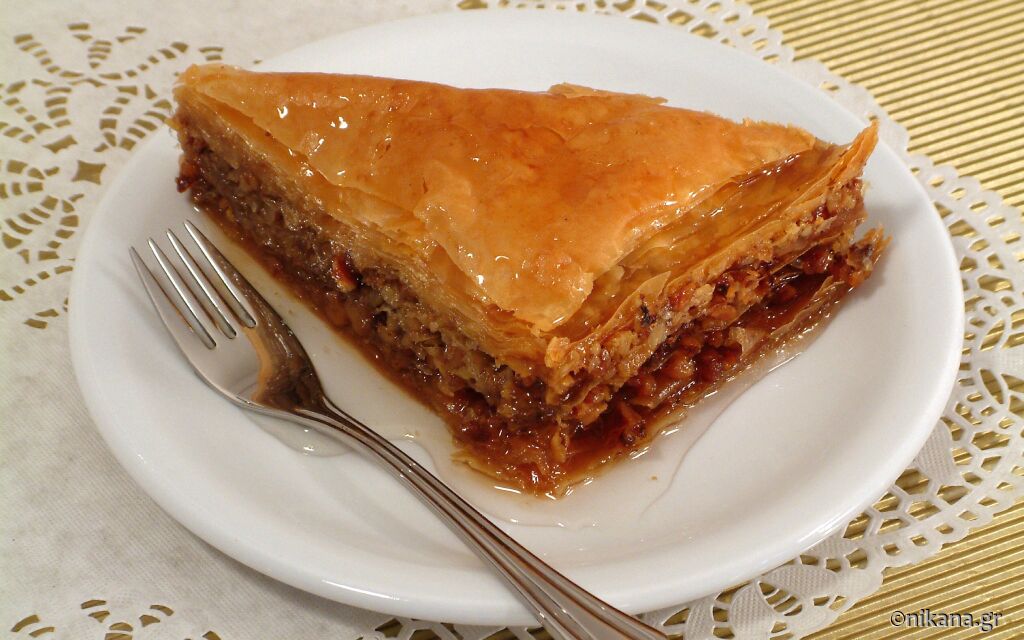
Every region of Greece has its traditional Christmas specialties, both savory and sweet. The specialties vary from region to region, but most of them have one thing in common: meat in various forms. Traditional sweets like baklava, kurabiedes, and melomakarona are also present on the festive table. Take a peek with us into the festive table across Greece.
Central Greece and the Aegean Islands
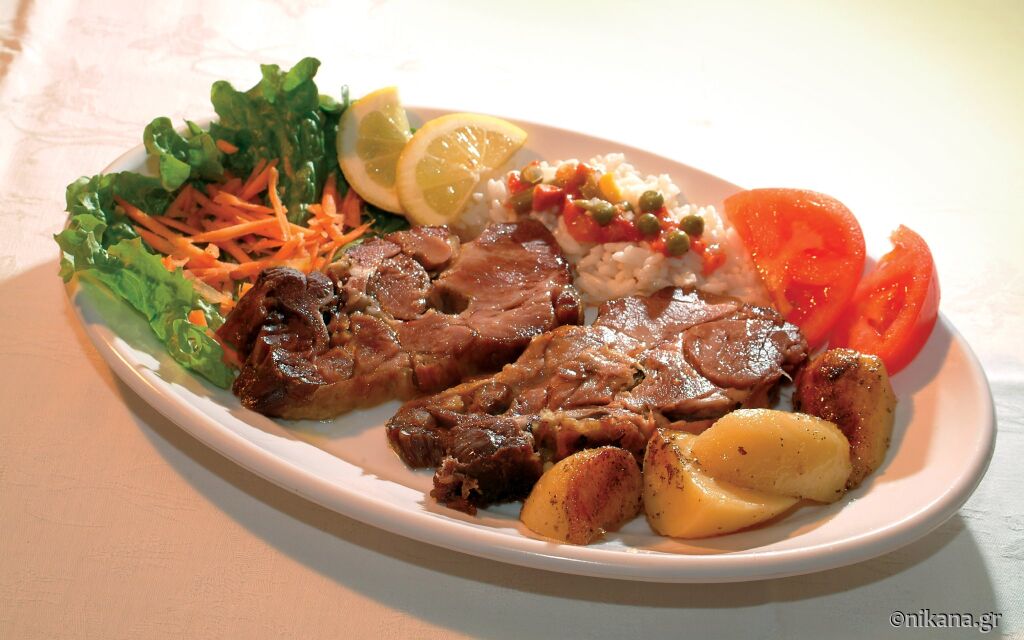
A traditional dish from central Greece is pork with celery. Also in these regions, the main dishes during Christmas include pacas (a type of jelly-like soup. It is prepared similar to our jelly, but it is eaten warm, with the addition of vinegar). Trikala (central Greece) – gurnada (grilled pork) and pork with celery. Samos (eastern Aegean Sea, near the Turkish coast) – jelly (cold dish of boiled pork with lemon). Mytilene (island of Lesbos, eastern Aegean Sea) – placeda, a variation of baklava with a richer filling and lots of walnuts. Evia (island, east of Athens, Aegean Sea) – Babo (cooked thick intestine, stuffed with liver, spleen, and spices). Kos (Dodecanese, southeastern Aegean Sea) – on the day of Epiphany, marmarites are in the first place. It is a treat baked in a marble pot over a fire and resembles pancakes. More about the significance of Epiphany in Greece.
Some dishes prepared for Christmas Eve:
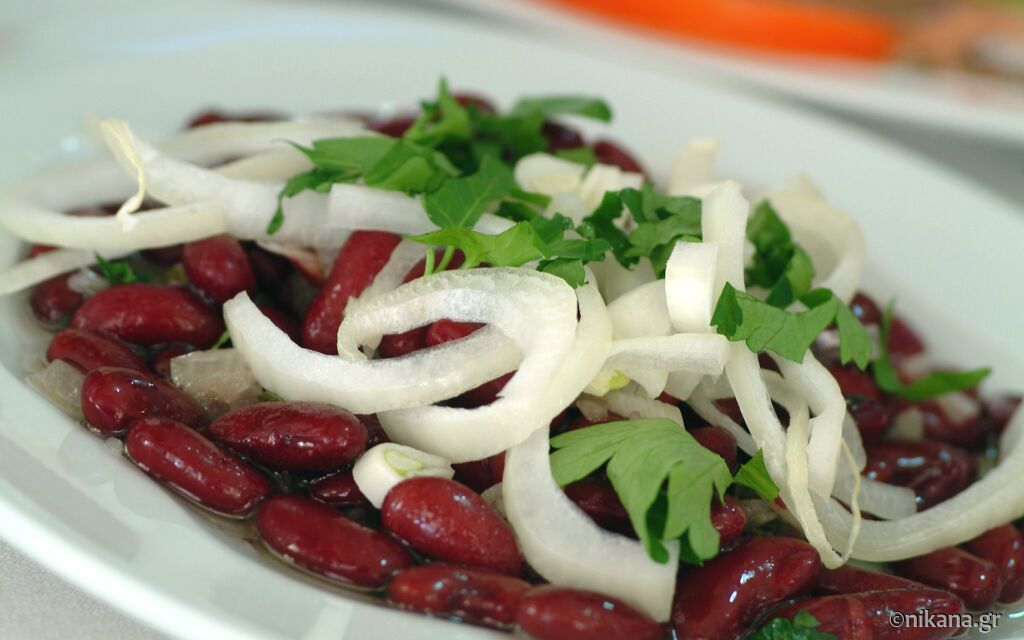
Kythira (island in the South Aegean) – on Christmas Eve, fasting beans with lots of onions are eaten. Syros (Cyclades islands, central Aegean) – on Christmas Eve, cauliflower or broccoli with fish is served. Naxos (Cyclades islands, central Aegean) – traditional soup with corn, beans, and wheat, which was believed to bring luck.
Sarma Connecting Kos and Kozani
Gambrakia or dolmades (stuffed vine leaves with minced meat) are made on many islands of the Dodecanese, as well as in Kozani (northern Greece); in both cases, the vine leaves sit in a barrel with salt for 40 days to acquire a special taste.
Epirus and Zagori
Epirus (continental northwestern Greece) – Stuffed cabbage rolls, pies: kusmeri or hosmeri (traditional meat pie), bacaria (spinach pie), galaktobureko (milk pie), and sweet pumpkin pie. Zagori (mountainous region in Epirus) – Traditional pies resembling pancakes, once baked in the fireplace on a hot stone, nowadays made in a pan. Ioannina (Epirus) – Agriogourouno salmi (wild boar in a special marinade that tenderizes the meat) and baklavadakia (small baklava).
Northern Greece
Dishes prepared in the northern part of Greece:
- Sarmades - stuffed cabbage rolls.
- Msura - a trilogy of meats: pork\, beef\, and chicken\, stewed with vegetables and rice in the oven.
- Sikoturta - sweet bread with figs\, a variation of Christopsomo\, with raisins and figs.
- Tursulutiko - coarsely chopped pork layered with sauerkraut and butter\, seasoned with crushed hot pepper with seeds.
Thrace and Evros (northeastern Greece)
In Thrace, especially in Evros, on Christmas Eve, a table is set with nine different dishes, raw and fasting, symbolizing abundance of food throughout the year, but also the nine months of the Virgin Mary’s pregnancy. According to another version, the nine foods symbolize the nine places visited by Christ, the Virgin Mary, and Joseph during their escape from Herod. However, the traditional Thracian recipe always includes pork with plenty of herbs and spices, simmered all night to be ready and warm in the morning after the Christmas liturgy.
Crete and Peloponnese
Crete (southern Aegean Sea) –
- Pork with lemon,
- traditional pies with honey and mizithra (a type of soft cheese),
- kalitsounia (small cheese or sweet pies).
Peloponnese – meat pies. Sparta – Christmas kulura (cross-shaped cake, decorated with almonds and walnuts).
Ionian Islands
Corfu, Lefkada, Kefalonia, Zakynthos indulge in the flavors of the following traditional dishes:
- Avgolemono soup (eggs and lemon),
- roasted poultry (goose, chicken, rooster),
- pasticada (cooked meat in sauce, often with pasta),
- holiday cakes and cheeses.
Turkey on the Christmas Table - a modern dish accepted in Greece
Stuffed turkey holds a special place on the festive table worldwide, including in Greece today.
- The custom has been adopted by many countries around the world, with the Spaniards bringing it to Europe in 1824 from Mexico, spreading it throughout Spain, France, and England.
- Since ancient times, it has been a custom to serve poultry at the Christmas table, especially goose, considered the bird of the Sun; whoever had a goose on the table provided protection for themselves and their family.
- Turkey has become the most prominent part of the festive table as it was considered unusual poultry and was only cooked on major holidays. Today, in Greece, turkey is prepared on New Year’s Eve.
- It used to be a custom to stuff chicken, or kurko, with chestnuts, walnuts, raisins, ground meat, onions, pepper, and parsley, and then roast it.
Although chicken soup was traditionally prepared for Christmas, in regions like Thessaly and Crete, or rooster soup in Lefkada, where it was traditionally eaten after fasting upon returning from the midnight service, we can say that turkey on the Greek holiday table is a modern innovation.
The Christmas and New Year’s table in Greece is much more than food – it is a combination of tradition, family, and local customs. From roasts and pork specialties to sweet baklava and jellies, to fish and soups served on Christmas Eve, each region preserves its unique recipe and ritual. Through these traditions, Greeks maintain a connection with the past, passing on culture and tradition to new generations. Visit Greece during the holidays and enjoy the richness of flavors, scents, and stories that each bite carries.
Read more about the holiday programs and attractions in Thessaloniki and Athens here: New Year and Christmas in Thessaloniki and Athens . If you want to prepare them at home, here you can find recipes for the traditional Greek cakes melomakarona and kourabiedes.
We are always here to help you explore Greece! Follow us for the latest information, useful tips, and authentic experiences to make your holiday in Greece unforgettable!
We offer over 3,000 accommodations. Choose the one that suits you and your family by clicking HERE.
Follow us on social media where we regularly share exclusive offers, discounts, and special packages for holidays in Greece, as well as information, tips, and useful news. Facebook: Nikana.gr Instagram: @nikana.gr Tiktok: nikana.gr Facebook group: Live from Greece YouTube channel @NikanaTravel Write to us via email: nikana@nikana.gr Visit our website nikana.gr which is the leading source of information about Greece in the Balkans.


