


Learn about the tradition of Christmas bread in Greece - Christopsomo, its symbolism and how it is made in different parts of Greece.
Greeks end the Christmas fast on Christmas Eve (December 24), when a large family meal is traditionally prepared, the first of the Christmas celebrations.
- The fast lasts from November 15 to December 24.
- Christmas Eve is the last day of the fast, but customs vary by region – some end the fast only in the evening after church services.
- From Christmas Day (December 25) onwards, meals are no longer restricted by the fast, and the festive table includes meat, dairy products and rich specialties, including Christopsomo.
In larger cities, barbecues are held on Christmas Day and souvlaki is baked with music and often dancing. For more on celebrating Christmas and New Year in Greece and holiday programs, check out What to do in Thessaloniki for Christmas and New Year - best events, restaurants, and activities.
Christmas bread in Greek tradition
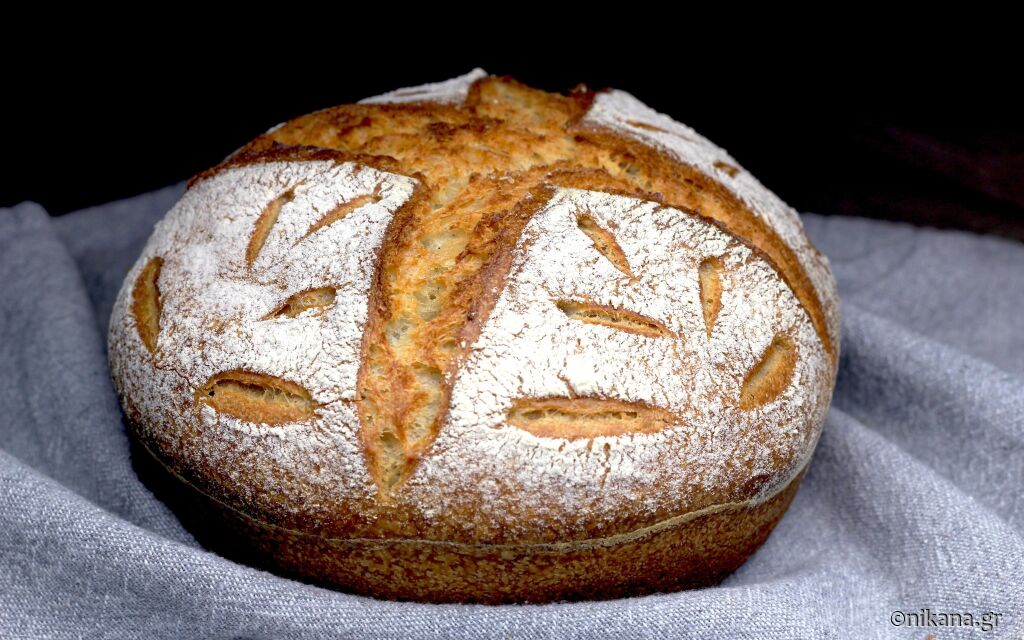
Christopsomo is a Christmas bread of great importance in the old Christmas customs of Greece and represents one of the most important symbols of the holiday. They are not just food, but part of a family and religious ritual that is passed down through generations.
Whether it’s regular bread, sweet bread with butter or olive oil, with grated lemon or orange peel and spices, they are always prepared with carefully selected ingredients and dedicated kneading.
Christopsomo - traditional types of Christmas bread in Greece
Christopsomo is prepared with specific ingredients and flavors in different parts of Greece. In some regions, honey, rose water, cloves, sesame seeds, and nuts are added, while in other areas, raisins, dried figs, orange peel, and local spice blends are used. In certain areas, such as Zakynthos, the bread can be something between bread and cake, with more ingredients - orange peel, pine nuts, raisins, and spices, and serve as the central holiday dessert.
Recipe for Christopsomo (traditional recipe from Mount Athos)
If you want to experience the authentic taste of Greek Christmas, try this traditional recipe for Christopsomo, prepared by monks on Mount Athos. This recipe is from the monastic tradition and uses aromatic spices and nuts typical of authentic Greek Christmas bread from Mount Athos. (Monastiriaka)
Ingredients
500g yellow flour 500g white flour 1 packet of dry yeast 1 tablespoon of salt ½ cup of olive oil 1 cup of black grapes (raisins) ½ cup of almond kernels 1 cup of walnuts 1 teaspoon of cinnamon 1 teaspoon of cloves ½ teaspoon of cardamom Sesame seeds for sprinkling
Preparation
1. Sift both types of flour in a mixing bowl, then add salt, yeast, cinnamon, cloves, and cardamom. 2. Gradually add warm water and knead the dough well. Finally, set aside a larger piece of dough in the shape of a “punch” dough. 3. Add olive oil, grapes, walnuts, and almonds quartered to the rest of the dough. 4. Once the dough is kneaded, shape the bread into a round loaf and place it in a round baking pan. 5. From the separated piece of dough, make two strips and form a large cross over the loaf. 6. Brush the bread with water and generously sprinkle with sesame seeds. 7. Cover the bread and leave it in a warm place to rise. 8. When it has risen enough, bake in a preheated oven at 175°C for about one hour.
Each loaf of Christopsomo is kneaded with special care and dedication, and as it is prepared, the house is filled with the scent of the holiday and the warmth of the gathered family.
Once cooled, Christopsomo is ready to be served to family and friends, as part of the holiday ritual and a symbol of togetherness.
Shapes and decorations of Christmas bread
Symbolism of the cross and ancient decorations
The shape of Christmas bread varies: round, braid, roll, loaf, or even baked in a pan. Today, the dominant shape is the cross, while in the past, decorations depended on the family’s activities and local customs. Agricultural tools, sheaves, sheep, and shepherds often appeared as dough decorations.
Regional differences in decoration
- Macedonia: sykotourta with dried figs and raisins.
- Peloponnese and Zakynthos: braided bread with orange peel, pine nuts, spices, sometimes with a gold or silver coin in the middle.
- Mountain villages: dough decorations depict people, livestock, ships, and elements of nature.
Stavros - cross-shaped bread Stavros is a cross-shaped bread, flavored with coriander and sprinkled with sesame seeds, symbolizing abundance and fertility. It is cut on Christmas Eve, New Year’s Day / Saint Basil’s Day, or on the eve of Epiphany.
Learn more about Christmas and New Year’s food in Greece.
How Christmas bread is broken and shared
In Greece, breaking Christmas bread has deep symbolism and is participated in as a ritual that connects family, faith, and unity. Christopsomo is traditionally baked before Christmas or on Christmas Eve, and its breaking represents an act of blessing and sharing grace within the household. Instead of a knife, the bread is torn by hand to avoid injuring the newborn Christ and to bless Christ, similar to the way people in ancient times shared bread in communion. In some parts of the country, the oldest family member or the bread host takes the first piece in their hands and dedicates it to Christ with a prayer, then distributes the rest to the household members in order (elders), while in some regions, the first piece is left for the poor or for a stranger knocking on the door, symbolizing hospitality and solidarity.
This act is often seen as equivalent to the communal taking of bread, similar to the story of the Last Supper, where bread is a symbol of Christ’s presence.
Other holiday breads in Greece
Although Christopsomo is the central Christmas bread, during the holiday period, which lasts twelve days in Greece (from Christmas Eve to Epiphany), other important breads are prepared:
- Vasilopita: bread or cake for New Year’s dedicated to Saint Basil, often with a coin, a symbol of luck and prosperity.
- Tsoureki: sweet braided bread with spices and citrus peel, popular during Easter and holiday celebrations (more: Tsoureki - traditional sweet bread and tasty treat).
- Stavros: cross-shaped bread (already mentioned)
Children and Christmas bread in folk customs
In northwestern Greece, small loaves were kneaded for children who sang Christmas songs - kalanda. Kalanda, kolianda, and klikia are special breads for children.
In Kozani, there are kolianda - small breads shaped like animals and plants. The first bread with a cross was intended for the Virgin Mary and stood on the iconostasis until the next year (“Tastes from old Kozani”, p. 145-7).
In Thrace and Macedonia, they make the so-called klikia (from Byzantine kilikiona), small loaves with a white egg (it is believed that when an egg enters such bread, it is always white) and decorate them with ornaments made using scissors or a comb.
Learn more about Christmas folk songs - Kalanda.
Christmas bread as a gift and act of solidarity
Christmas bread is also given as a gift. Guests at Christmas dinners give the hostess Christmas bread, and sometimes brides used to send such breads to their grooms. The poor and those in need are not excluded - the first piece when broken is intended for the first beggar or stranger knocking on the door. (Nikitas P., “L. Minologio”, p. 157; Mariana Kavrulaki, “Language of Taste”, p. 303-305, publisher Aspri Mera).
Many questions arise as to why Greeks celebrate Christmas on December 25th. The answer is not short, so we recommend reading the text The significance of Epiphany in Greece and day of celebrating Christmas.
We are always here to help you explore Greece! Follow us for the latest information, useful tips, and authentic experiences to make your holiday in Greece unforgettable!
We offer over 3,000 accommodations. Choose the one that suits you and your family by clicking HERE.
+
Internet as soon as you cross the border
You can have Internet as soon as you cross the border by purchasing our eSIM card here: Nikana eSIM.
Follow us on social media where we regularly share exclusive offers, discounts, and special holiday packages for Greece, as well as information, tips, and useful news. Facebook: Nikana.gr Instagram: @nikana.gr Tiktok: nikana.gr Facebook group: Live from Greece YouTube channel @NikanaTravel Email us at: nikana@nikana.gr Visit our website nikana.gr, the leading source of information about Greece in the Balkans.


