









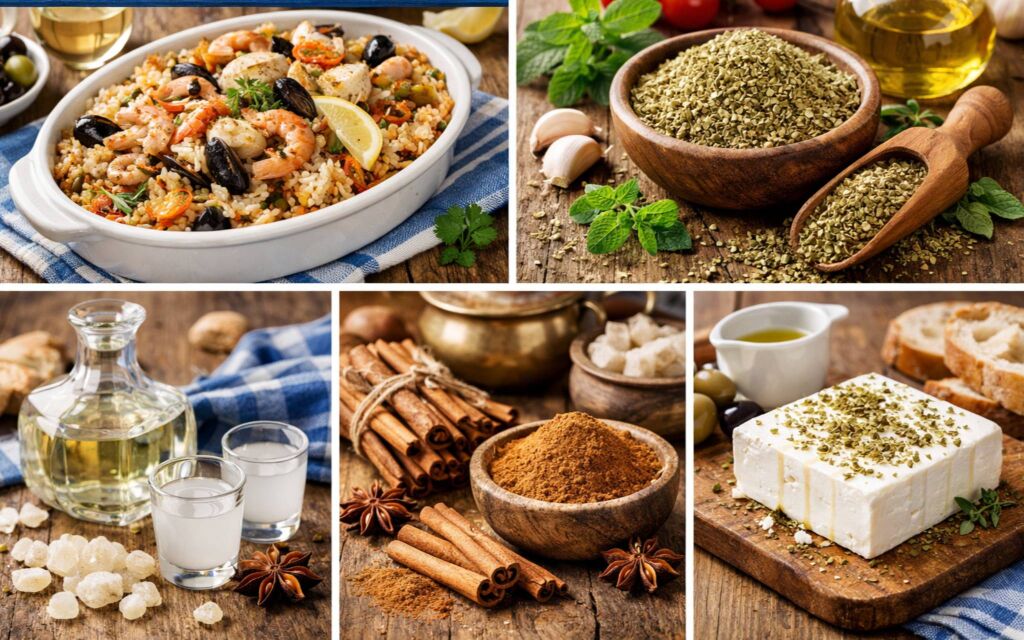
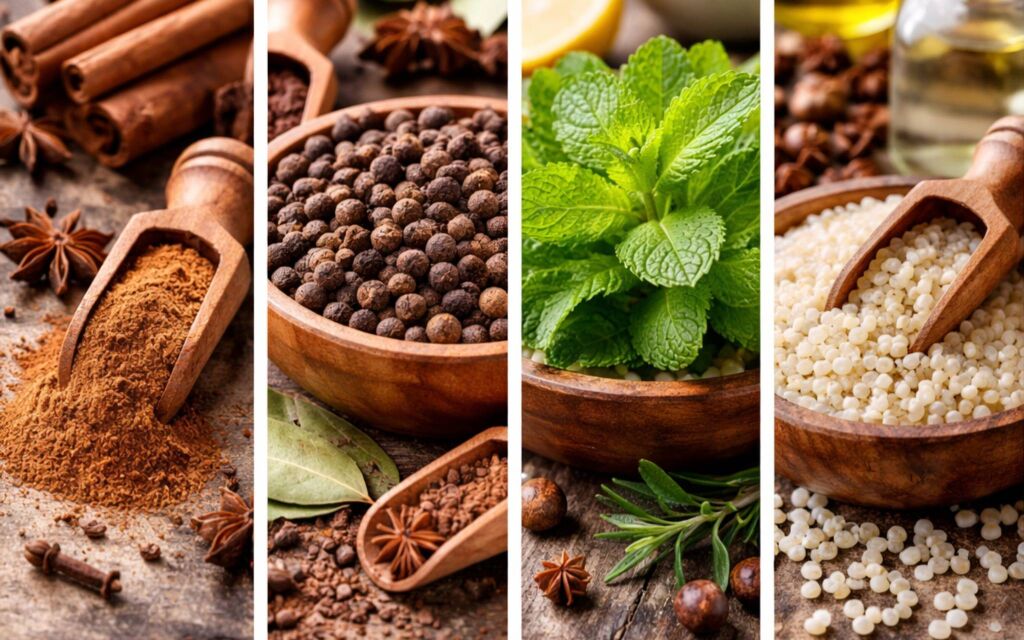
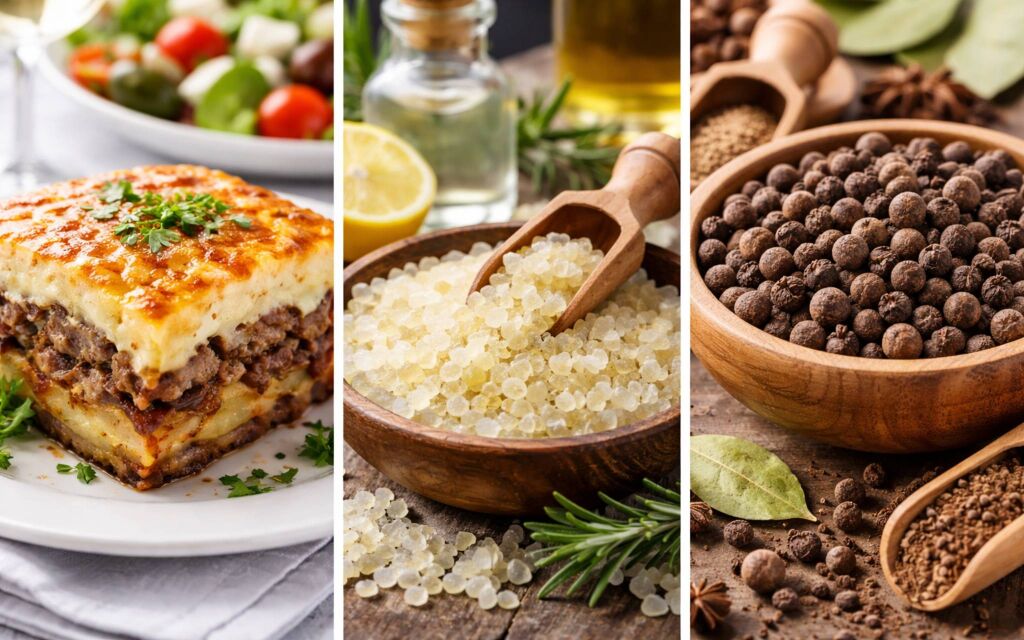
Cinnamon in meat, mint in meatballs and the scent of wild oregano. A guide to the most important Greek spices with shopping tips and stories that preserve the spirit of ancient Greece. In this text, we reveal the “secret” spices of Greek cuisine.
Greeks are masters at combining spices where we would never think to put them.
Surely it has happened to you that in a Greek tavern you order meat or sauce, and you smell a scent that reminds you of something but you don’t know exactly what.
Here’s what actually smells like Greece on your plate
1. Cinnamon in meat? Yes!
If you order kokinisto (meat in red sauce) or stifado, you will smell cinnamon. Greeks don’t save it just for rice pudding and apples. Cinnamon gives the meat that nice “warmth” and depth of flavor.
- kokinisto (meat in tomato sauce)
- stifado
- Greek moussaka
The role of cinnamon is not to sweeten the dish, but to give it depth, warmth, and aromatic richness, especially when combined with tomatoes. You can find recipes for dishes with cinnamon in our articles: GREEK MOUSSAKA - recipe
2. Bahari – the spice that gives “that special scent”
They call it bahari, and we call it allspice. It looks like larger pepper and smells like a mix of cloves, cinnamon, and nutmeg. It goes in almost every red sauce, macaroni with ground meat (makaronia mikima), in meat marinades, kokinisto, in moussaka and pastitsio. It even goes in some Christmas cookies and somewhere (on the islands) they add it to baklava!
It’s not always used, but it’s often the reason why a dish has “that special scent.”
3. Diosmos (domestic mint) - summer freshness on the plate and in meatballs
If your Greek meatballs (keftedes) or gemista (stuffed peppers) smelled like something fresh, that’s diosmos. It’s a type of domestic mint (mentha spicata) that gives dishes incredible freshness. Although not traditionally part of the recipe for Greek salad, they sometimes add it, and then you feel that special, fresh scent and taste on a hot summer day.
4. Mahlepi – the smell of a Greek bakery
That specific scent of tsoureki (Greek Easter bread) comes from a spice made from the pit of wild cherry. That’s the smell that hits you as soon as you enter a Greek bakery in the spring. Learn more about tsoureki, the traditional sweet bread baked for Easter.
5. Mastic - authentic “tear” from Chios
Mastic is resin from a tree on the island of Chios. It has a taste that reminds of pine and menthol. It goes in ice creams (famous kaimaki), liqueurs, and cakes. You either love it or you don’t – there’s no in-between!
You can buy mastic as
- chewing gum or
- in small packets as gumdrops.
- It’s usually found next to the cash register in every store in Greece.
Tip: The price is affordable so you can buy this spice and the whole family can enjoy it in gum form. Mastic is good for the stomach, so you can chew it without any worries and also have a positive effect on your health. The taste is very nice and refreshing. We highly recommend small packets of mastic (pieces of resin) or as chewing gum (from experience). Buy them as a nice souvenir for yourself to bring home or to give to your loved ones.
Mastic has its own special story and place in Greek tradition and art. Read more about Greek mastic.
6. Oregano (rigani) - the smell of sun and stone on the plate
If you’ve ever wondered why the Greek salad in a tavern smells ten times stronger than yours at home, the secret is in wild oregano (Origanum vulgare).
- Not all oregano is the same: Greek oregano grows in direct sunlight, on rocky terrain, and that’s why it has an incredibly high percentage of essential oils.
- Where Greeks put it: Almost everywhere! On the famous feta cheese, grilled fish, souvlaki, and of course - over french fries.
- A little trick: Greek chefs add oregano at the very end, often rubbing it between their palms directly over the plate to “awaken” the scent.
It’s used almost everywhere:
- Greek salad
- feta cheese
- fish
- souvlaki
Read a detailed guide here: Oregano - the plant that smells like the Mediterranean.
“Shopping list” for a Greek store (take a screenshot!)
Here’s a simplified list of spices from the text so you don’t get confused in front of the shelves:
| Our name | Greek name (pronunciation) | Greek name (written) |
|---|---|---|
| Cinnamon | Kanela | Κανέλα |
| Allspice | Bahari | Μπαχάρι |
| Domestic mint | Diosmos | Δυόσμος |
| Wild cherry | Mahlepi | Μαχλέπι |
| Mastic | Mastiha | Μαστίχα |
| Oregano | Origani | Ρίγανη |
Note: we have bolded the letter that is accented in the Greek pronunciation, so you can pronounce the names better when shopping.
Our recommendation:
Next time you’re in Greece, don’t just buy magnets. Stop by a local spice shop and look for bahari or mahlepi. Your whole autumn will smell like the sea.
Check out suggestions for the best Greek dishes you must try.
If you’re a vegetarian, you’ll definitely enjoy many dishes in Greece. Check them out here: Vegetarian dishes in Greece.
A story about a scent that survived history
You might be wondering - why is there cinnamon and allspice in meat all over Greece? The answer lies in a difficult, but proud history. These spices are the soul of the famous Politiki kuzina (kitchen of the Constantinople Greeks). They spread massively in Greece after 1922, during the great population exchange and pogroms of Greeks from Asia Minor. The exiled Greeks carried their spices and recipes in their bundles, alongside icons - it was the only thing left from their old home.
However, on the islands in the eastern Aegean, like Lesbos (Mytilene) or Chios, these scents have always been familiar. The proximity to Smyrna (today’s Izmir) meant an unbreakable connection - people traded, made friendships, and shared the same plate for centuries. For them, cinnamon in meat wasn’t a novelty, but a symbol of shared life that connects two shores.
The biggest names that today preserve the glory of this cuisine are researchers like Mariana Kavroulaki, and at the end of this text, be sure to check out the link to a wonderful movie that will reveal all the magic of these spices. This tradition is also detailed in the books of the famous Vefa Alexiadou, the greatest authority on Greek gastronomy.
Did you know?
The use of cinnamon in meat is a trademark of the famous Politiki Kouzina (kitchen of Constantinople Greeks). A fascinating movie about this tradition was made, titled A Touch of Spice (Politiki Kouzina), and we highly recommend it to all Greece lovers.
Which Greek spice surprised you the most the first time you tried it in a dish? Cinnamon in stew or something else?
Let us know in the comments!